When simple automation is not enough, we help small businesses design role-based AI systems that can manage recurring work across inboxes, calendars, CRMs, support queues, and internal operations with clear rules, connected tools, and human oversight.
A digital operator is not just a chatbot. It is an AI-assisted business role designed to help move work forward with less step-by-step supervision.
Many business tasks are too messy for a simple if-this-then-that workflow, but too repetitive to keep handling manually forever. Founders, operators, and key team members often carry work that depends on memory, judgment, follow-up, and knowing what to do next.That is where most AI efforts break down.
A chatbot can answer questions.
An automation can follow a fixed path.
But some work needs something in between rigid automation and a full-time hire.
That is where a digital operator fits.
Too much manual follow-up
Leads, emails, tasks, and requests sit too long because someone has to keep triaging them manually.
Too much tribal knowledge
The process lives in one person’s head, making delegation difficult and growth harder.
Too many exceptions for simple automation
The goal is clear, but the path changes depending on context.
A digital operator is a role-based AI system designed to support a real business function.
Instead of being told every step each time, it is given:
a defined role
priorities and success metrics
business rules and guardrails
playbooks for common scenarios
access to the right tools and data
clear escalation paths for human review
This allows the system to handle recurring work with more context and less micromanagement.
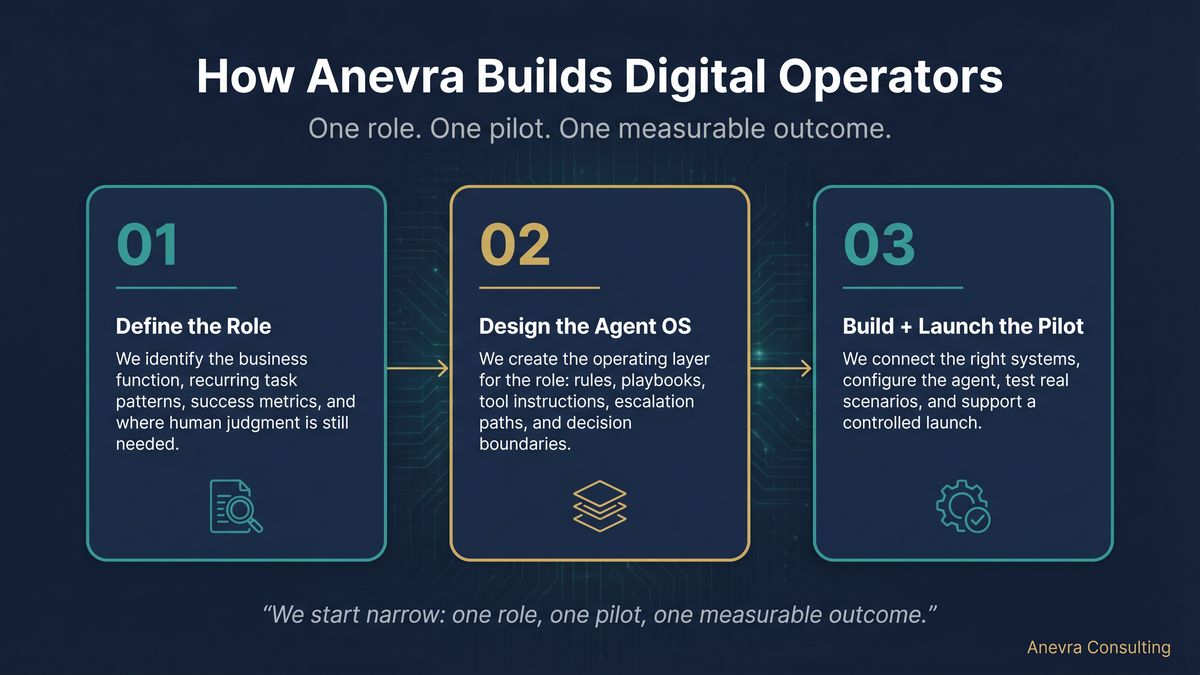
Step 1: Define the role
We identify the business function, recurring task patterns, success metrics, and where human judgment is still needed.
Step 2: Design the Agent OS
We create the operating layer for the role: rules, playbooks, tool instructions, escalation paths, and decision boundaries.
Step 3: Build and launch the pilot
We connect the right systems, configure the agent, test real scenarios, and support a controlled launch.
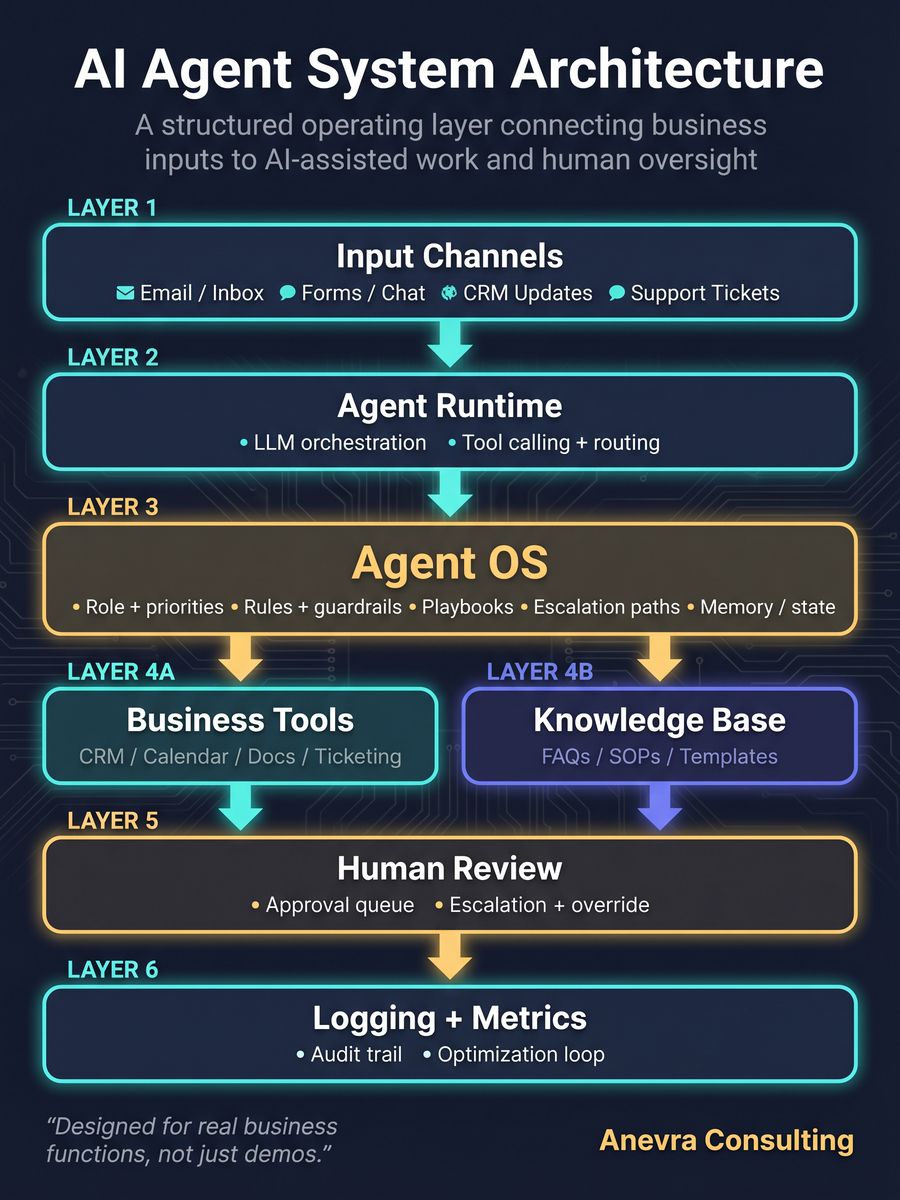
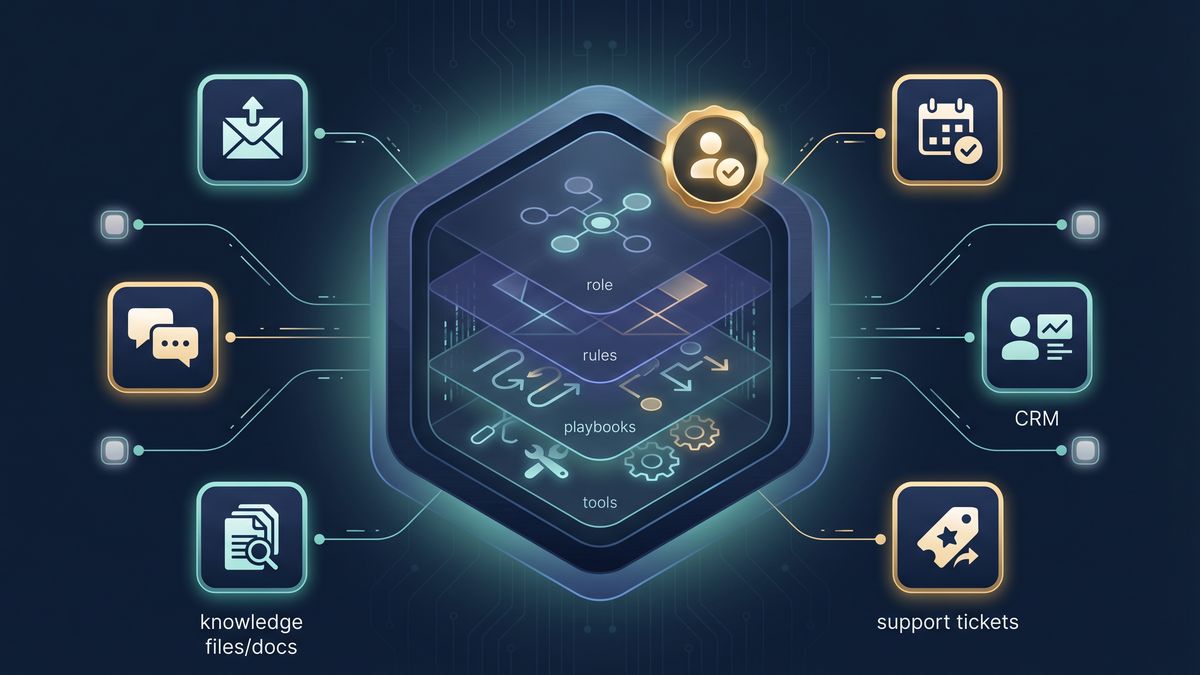
Every digital operator we design includes a practical architecture that connects the role to real business tools, business knowledge, and human oversight.
A standard operator system may include
A digital operator works best when role design, tool access, and human review are built together.
AI Digital Operator Use cases
These systems work best when the business role is clear, the work repeats, and the process requires context rather than a single rigid path.

Qualifies inbound leads, replies to common inquiries, books meetings, and keeps CRM activity moving.
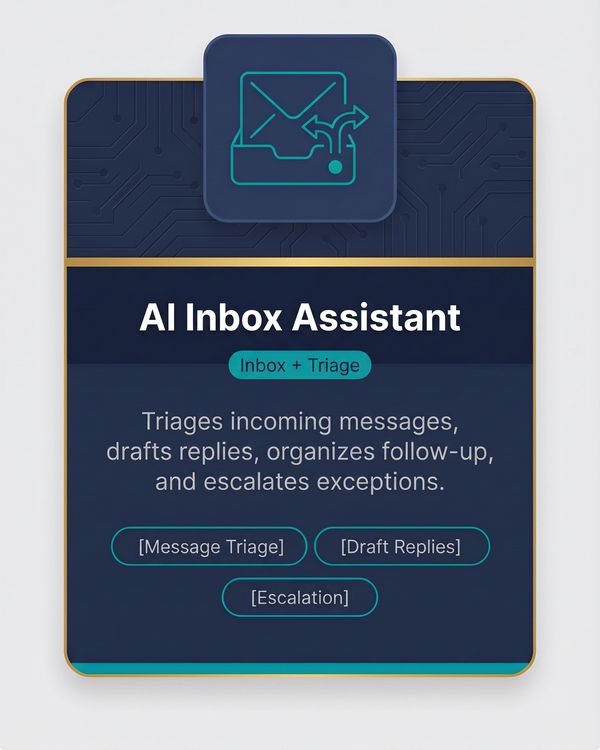
Triages incoming messages, drafts replies, organizes follow-up, and escalates exceptions.
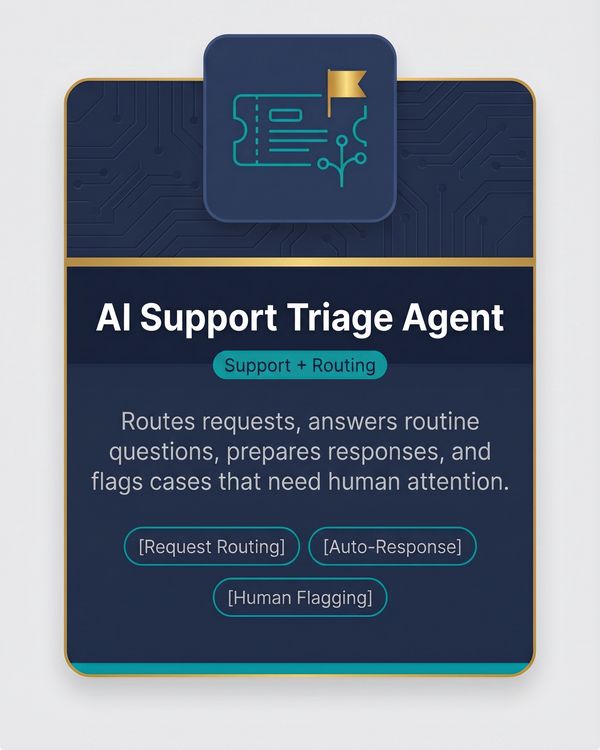
Routes requests, answers routine questions, prepares responses, and flags cases that need human attention.
Tracks tasks across forms, spreadsheets, email, and internal systems to keep work from stalling.
Handles appointment coordination, reminders, rescheduling, and post-meeting follow-up.
Guides clients, applicants, or customers through the next steps while collecting missing information.
Each engagement is designed to move from role clarity to working pilot, with the structure needed for real use inside the business.
Deliverable List:
role definition and pilot scope
Agent OS documentation and playbooks
system and integration design
tool and data source mapping
human review and escalation logic
pilot build and testing
launch support and operator training
optimization roadmap for future expansion
Assess the role, map the work, and determine where a digital operator can create value.
Starting at $3,500
Design the operating model, playbooks, rules, architecture, and pilot plan
.Typical range: $6,500 to $10,000
Implement one focused digital operator with connected systems, testing, and launch support.
Typical range: $12,000 to $22,000
Refine playbooks, improve performance, add scenarios, and expand the system over time.
Monthly support available
Software and usage costs vary based on tools, integrations, and activity volume.